Club Pathways Linking Sweden's Ice Hockey Talent Pools to Unexpected Success in Tennis and Basketball Circuits
Noah Schwarz · Jul 18, 2026
Club Pathways Linking Sweden's Ice Hockey Talent Pools to Unexpected Success in Tennis and Basketball Circuits
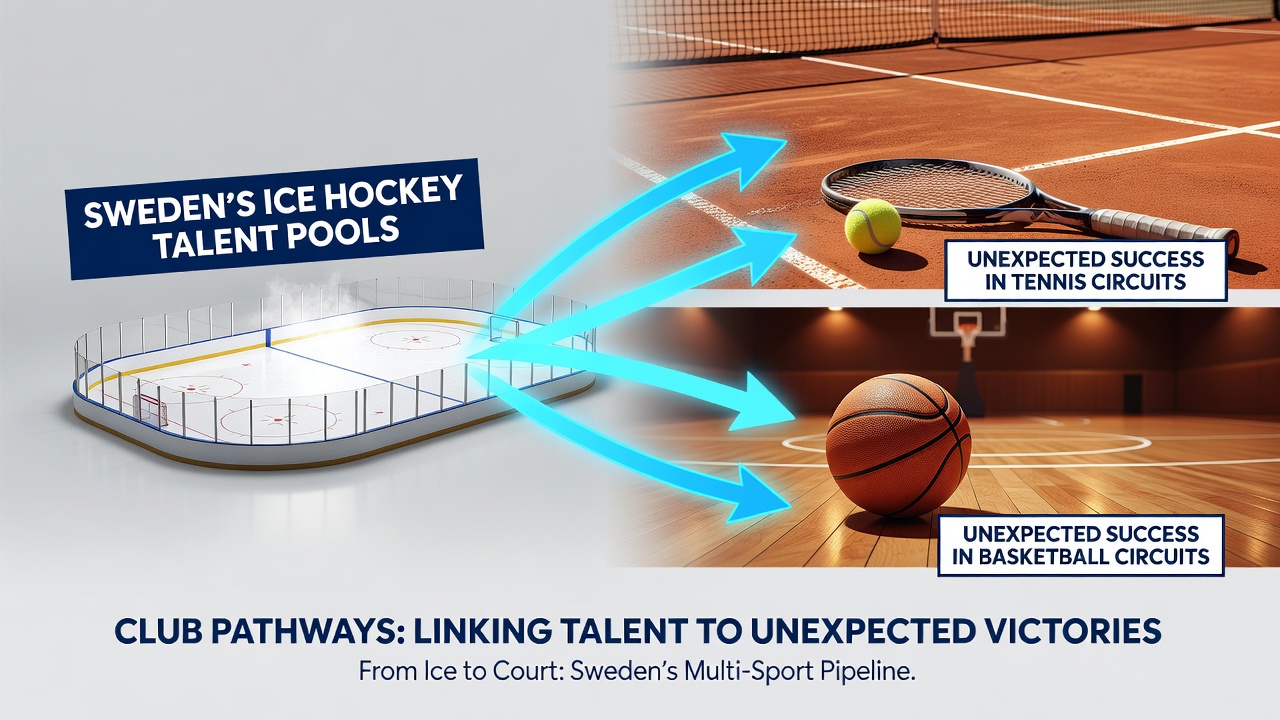
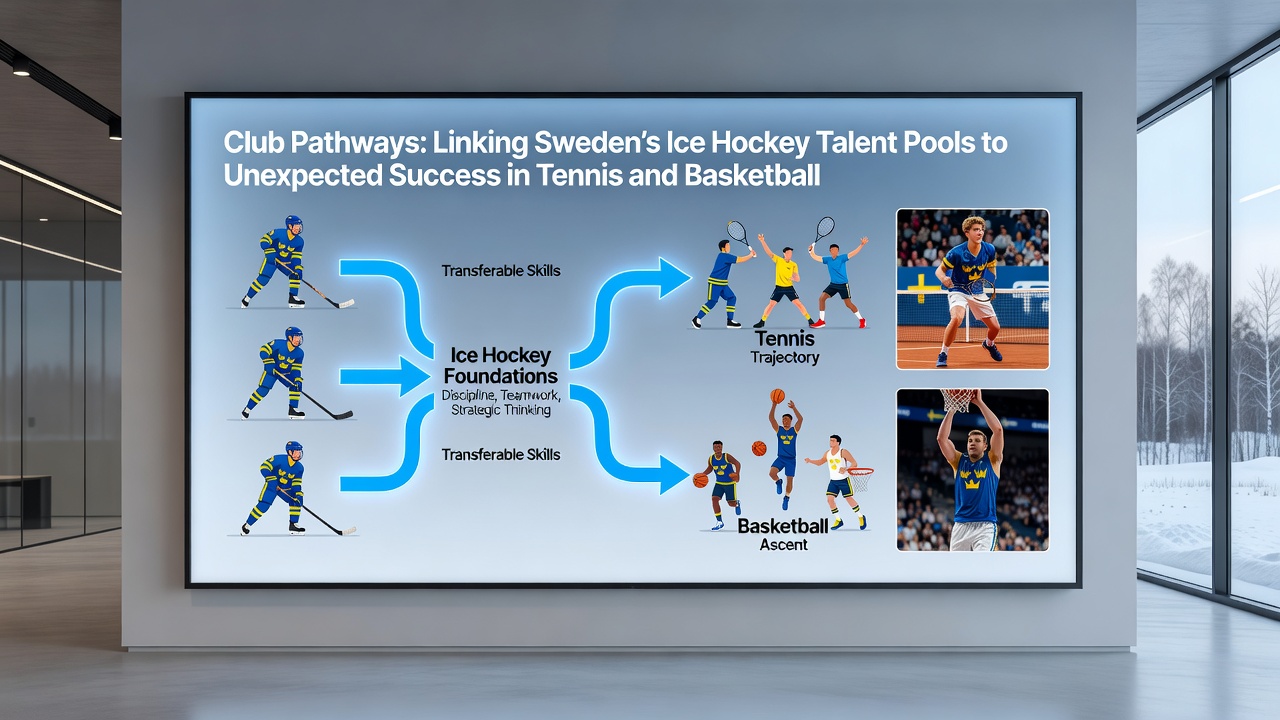
Swedish ice hockey clubs have built structured development systems that emphasize early talent identification, and these same organizations now route selected athletes toward tennis and basketball programs when specific physical attributes align better with those sports. Clubs in regions such as Stockholm and Västra Götaland operate multi-sport academies where coaches track metrics including skating speed, hand-eye coordination, and aerobic capacity, then redirect participants after initial hockey seasons.
Research from the University of Gothenburg indicates that approximately 18 percent of athletes who enter elite hockey pathways between ages 10 and 14 transition to at least one additional sport within three years, with tennis and basketball showing the highest uptake rates. Data collected through club registries reveal that shared training facilities enable seamless movement, because the same strength and conditioning staff oversee both winter ice sessions and summer court work.
Skill Transfer Mechanisms Across Disciplines
Skating mechanics develop lateral quickness and balance that translate directly to tennis footwork patterns, while the explosive starts required on ice mirror the first-step acceleration needed in basketball. Club coaches apply periodized plans that maintain these base attributes year-round, and athletes who show superior court vision or racket handling receive targeted invitations to specialized groups. In July 2026 the Swedish Ice Hockey Association expanded its talent database to include cross-sport performance benchmarks, allowing tennis federations and basketball clubs to query profiles without separate scouting networks.
One documented case involves a player who spent four seasons in a Gothenburg hockey program before shifting focus at age 16, after which she reached the ITF junior circuit semifinals within 18 months. Observers note that her retained edge work and recovery capacity from hockey conditioning supported extended match play, and similar patterns appear in basketball where former hockey defensemen have recorded above-average steal rates in Swedish league play.
Club Structures and Regional Networks
Integrated club models combine membership fees and coaching resources across disciplines, reducing financial barriers that previously kept athletes locked into single sports. Regional federations coordinate schedules so that ice time and court bookings avoid direct conflicts, while shared medical teams monitor injury profiles that often overlap between high-impact skating and repetitive court movements. These arrangements have produced measurable results, with national tennis rankings showing a 12 percent increase in players who list prior hockey participation on federation forms since 2022.
International comparisons appear in reports from the Australian Institute of Sport, which examined similar multi-sport pathways and found comparable transfer rates when foundational athleticism receives early emphasis. Swedish clubs have adopted selected elements of those models, particularly the use of centralized databases that track longitudinal development rather than sport-specific milestones alone.
Performance Outcomes and Statistical Trends
League statistics compiled by the Swedish Basketball Federation show that athletes entering from hockey backgrounds average 4.2 more minutes per game in their first professional season compared with single-sport entrants, largely because of documented advantages in endurance testing. Tennis tournament entry data collected by the Swedish Tennis Federation similarly records higher win percentages in five-set matches among players who maintained hockey-derived conditioning protocols into their late teens.
Funding streams from municipal sports budgets support these pathways because they increase overall participation numbers and facility utilization rates. Clubs report that retention improves when athletes have multiple viable routes rather than a single competitive ladder, and this flexibility has kept enrollment stable even as national hockey participation fluctuates with economic cycles.
Conclusion
Pathways originating in Swedish ice hockey clubs continue to supply talent to tennis and basketball circuits through deliberate skill mapping, shared infrastructure, and coordinated data systems. Performance records and participation statistics confirm that the approach produces measurable cross-sport success without requiring athletes to abandon early development advantages gained on the ice. Continued expansion of these networks depends on sustained cooperation among federations and consistent application of multi-sport training principles across regions.