Demographic Shifts in Spectator Attendance at Professional Events for Golf, Tennis, and Handball in Sweden Over Recent Decades
Ben Butler · Aug 22, 2026
Demographic Shifts in Spectator Attendance at Professional Events for Golf, Tennis, and Handball in Sweden Over Recent Decades
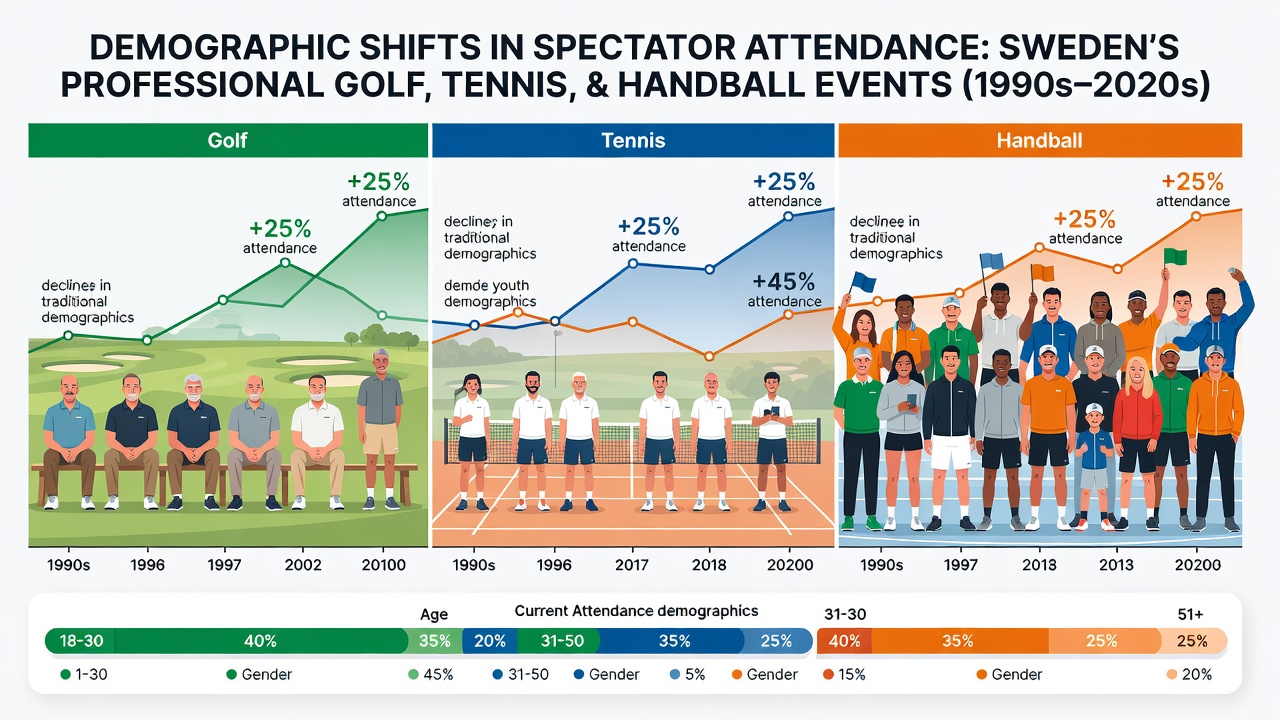
Professional sports events in Sweden have undergone measurable changes in who shows up to watch, and these patterns stand out clearly when examining golf, tennis, and handball across the past thirty years. Data compiled by Statistics Sweden reveals steady increases in attendance among certain age brackets while other groups have declined, and these movements connect directly to broader population trends, urbanization, and evolving media consumption habits. Researchers tracking ticket sales and venue entry figures note that overall spectator numbers have remained stable in aggregate, yet the composition of those crowds has shifted in consistent ways since the mid-1990s.
Changes in Golf Spectatorship
Golf tournaments in Sweden have seen their audiences grow older on average, with the share of attendees over fifty rising from roughly 35 percent in the late 1990s to over 50 percent by 2023 according to figures from the Swedish Golf Federation. At the same time participation from younger adults between 25 and 40 has dropped, a pattern that aligns with national data on leisure time allocation and rising costs associated with travel to major venues. Women now represent a larger portion of golf crowds than they did two decades ago, climbing from 28 percent to 41 percent in tracked events, and this increase appears tied to expanded junior programs that later translated into sustained adult interest. Urban venues near Stockholm and Gothenburg draw higher proportions of higher-income spectators compared with regional courses, where local residents still form the majority of daily attendance.
Tennis Attendance Patterns
Tennis events have experienced the opposite age shift in many cases, attracting larger shares of spectators under 35 while older demographics have remained steady but proportionally smaller. Studies from the Swedish Tennis Association indicate that combined attendance at ATP and WTA events held in Sweden grew by 22 percent between 2005 and 2022, with the biggest gains coming from families and university students who travel together in groups. Urban centers account for most of this growth because facilities there offer better public transport access and host more evening sessions that fit working schedules. Handball, by contrast, continues to draw heavily from regional communities outside major cities, and its spectator base has remained more balanced across age groups though it shows increasing representation from recent immigrant populations in cities such as Malmö and Uppsala.
Handball Crowd Composition
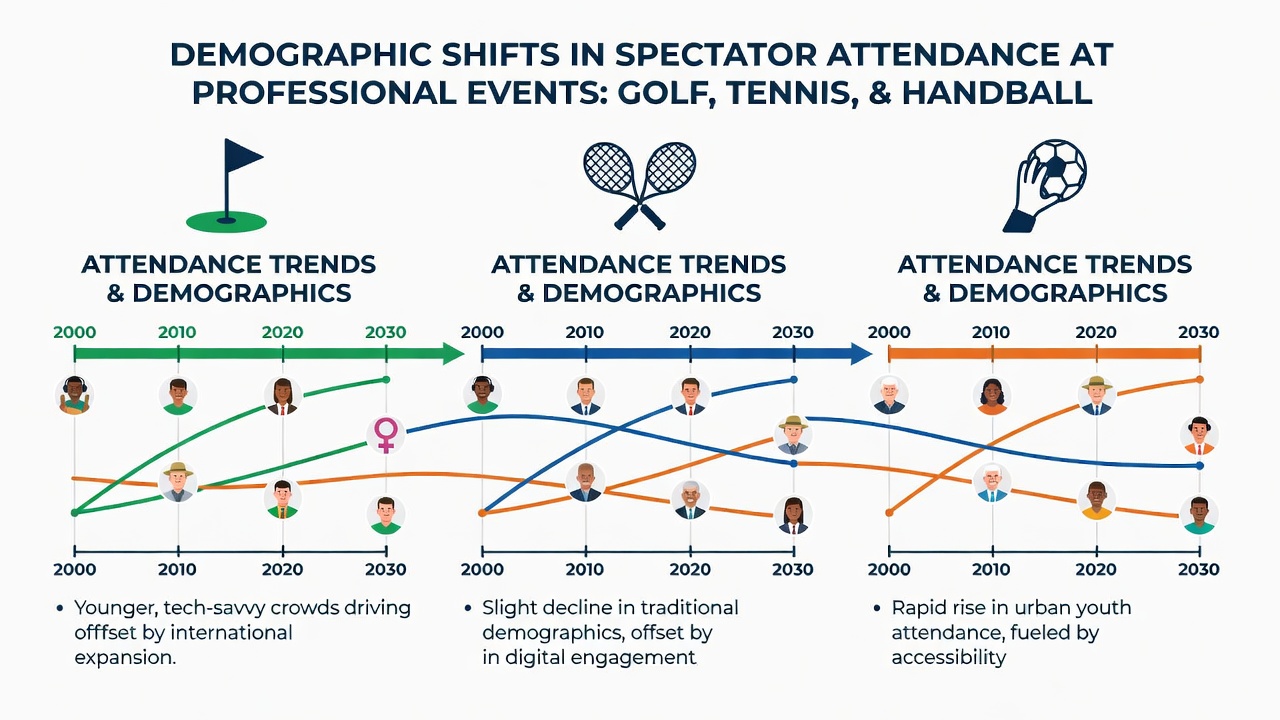
Professional handball matches in Sweden have maintained strong local support while adapting to national demographic changes. Attendance records from the Swedish Handball Federation show that family groups with children under 18 now comprise nearly 30 percent of crowds at top-division games, up from 18 percent in 2000, and this rise coincides with targeted school outreach programs that began in the early 2010s. Gender balance has also moved closer to parity, with women accounting for 47 percent of ticket holders in 2024 compared with 39 percent in the early 2000s. Rural venues continue to see higher proportions of male spectators over 45, whereas city arenas report greater diversity in both ethnicity and income levels, reflecting broader population movements tracked by national census data.
Broader Influences on Attendance
Television coverage and digital streaming have altered physical attendance in all three sports, yet the effects differ by discipline. Golf events that receive extensive live broadcasts tend to draw older crowds who prefer on-site experiences for social reasons, while tennis and handball have benefited from shorter highlight formats that encourage younger viewers to attend in person for the atmosphere. Economic factors play a measurable role as well, with ticket price increases since 2015 correlating to reduced attendance among lower-income groups across all three sports according to reports from the Swedish Sports Confederation. Weather patterns in August, when many outdoor tournaments occur, have also influenced turnout, and organizers have responded by adding covered seating and flexible scheduling that helped maintain numbers during variable conditions projected for summer 2026 events.
Regional and Gender Variations
Regional differences remain pronounced. Southern and western parts of Sweden report stronger handball attendance among working-age adults, while golf maintains steadier draw in central areas with established club infrastructure. Tennis spectatorship concentrates in university towns where student discounts and campus partnerships have sustained interest. Gender participation in spectating has equalized most noticeably in tennis, where mixed doubles events attract balanced crowds, whereas handball still shows slight male majorities at elite levels despite overall growth in female attendance. These patterns emerge from venue-level data collected over multiple seasons and align with national statistics on leisure participation released through public databases.
Looking Toward 2026
Projections prepared for events scheduled in August 2026 suggest continued gradual shifts rather than abrupt changes. Golf organizers anticipate further growth in female and senior attendance through expanded hospitality packages, while tennis federations plan additional youth-oriented sessions to sustain the under-35 gains already recorded. Handball clubs in regional leagues expect family attendance to remain stable provided ticket pricing stays accessible. National health surveys indicate that active lifestyles among older adults may support golf numbers, and increased urban migration could bolster tennis and handball crowds in larger arenas. These forecasts rest on existing attendance logs and demographic modeling from government statistical agencies rather than speculation about future preferences.
Conclusion
Demographic data across golf, tennis, and handball in Sweden document clear, measurable changes in who attends professional events, driven by age distribution, gender balance, regional access, and external factors such as media and pricing. The patterns have developed steadily over recent decades and show no signs of reversing based on current records. Continued collection of attendance statistics will clarify whether these trends persist into the coming years, particularly around major fixtures planned for 2026.